Artificial intelligence (AI) and physician training dominated discussions at the 29th Annual Scientific Conference of the Kenya Association of Physicians (KAP), as doctors highlighted efforts to improve healthcare delivery and address a growing workforce shortage.
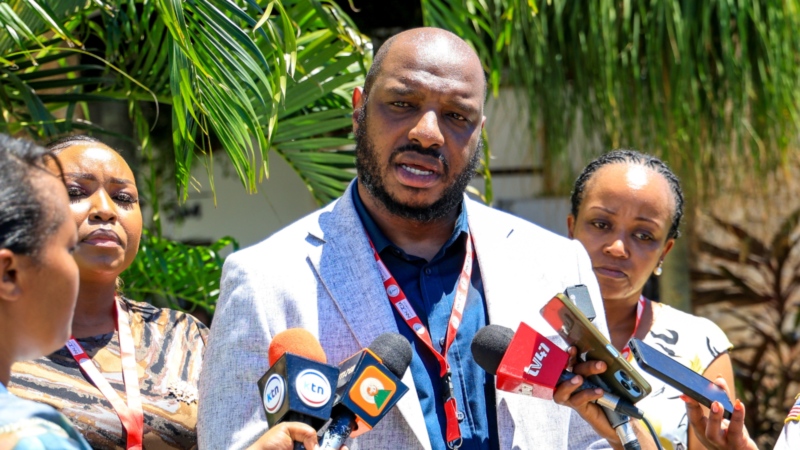
Speaking at the event, KAP President Dr. Eric Njenga said the conference is focused on the role of AI in advancing modern medicine.
“We’re looking at AI and cutting-edge medicine and its role in improving healthcare not only in Kenya but across sub-Saharan Africa and globally,” he said.
The conference brought together physicians, trainees and specialists from various fields including cardiology, oncology, renal medicine and infectious diseases, alongside research presentations from institutions such as the University of Nairobi and Aga Khan University.
AI to improve access and diagnosis
Conference organisers said AI is increasingly being used to enhance communication between doctors and improve patient care, particularly in underserved areas.
Dr. Irene Njeri said the technology is helping bridge gaps between urban-based specialists and healthcare workers in remote counties.
“AI is helping us communicate with physicians in far-flung counties, diagnose patients and follow up on outcomes,” she said.
She added that digital diagnostic tools, including radiology technologies, are enabling collaboration across facilities and supporting clinical decision-making.
Focus on training and mentorship
The association also highlighted ongoing efforts to expand physician training through the ECSACOP programme, a regional initiative involving seven African countries.
According to Dr. Olive Akunga, the programme promotes interaction between trainee and senior physicians, with a focus on mentorship, research and emerging technologies.
“There’s a lot of mentorship in research work, clinical practice and even the use of AI in the current medical landscape,” she said.
The training model allows doctors to study within county facilities, with the aim of improving retention and strengthening healthcare services at the local level.
Doctors cite persistent shortage
Despite these initiatives, the association said Kenya continues to face a shortage of physicians.
Dr. Njenga called on the government to increase funding for training programmes and support employment of doctors within their training institutions.
“What we need is funding to support trainees and ensure they are employed where they train. After completing the four-year programme, they can then serve in their counties,” he said.
Regulation of AI use
On regulation, Njenga said frameworks have been put in place to guide the use of AI in healthcare, particularly around patient data protection.
He cited oversight by the Kenya Medical Practitioners and Dentists Council and the ICT Authority.
“There must be safeguards on how patient data is collected, stored and used, and we must ensure that information generated through AI is accurate and reliable,” he said.
The three-day conference also featured workshops on point-of-care ultrasound and renal vascular access, as well as a memorial lecture in honour of a senior physician.