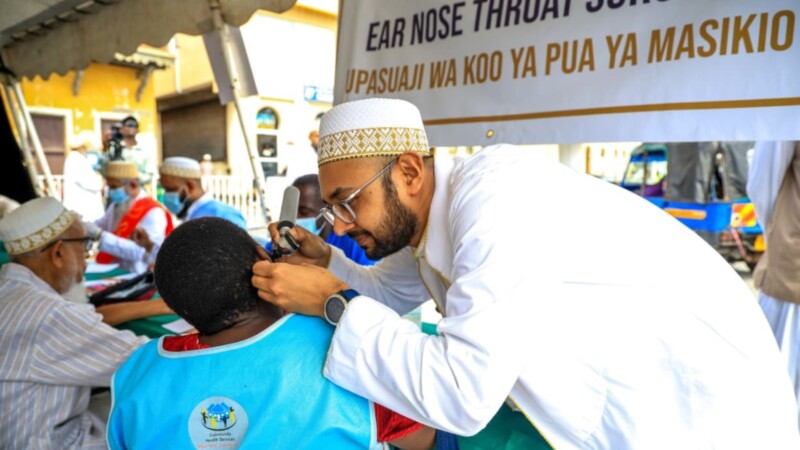
KWALE, Kenya—More than 1,400 patients in Kwale County suffering from groin-related conditions linked to Hernia are at risk of missing treatment if a donor-supported surgical programme run by AMREF Health Africa is disrupted due to funding uncertainty.
Health officials say the free screening and surgery initiative, which has been offering relief to vulnerable patients, could be affected following changes in international aid flows that have impacted several health programmes in the region.
Kwale County Chief Medical Officer Dr. Paul Gathuma said the partnership between the county government and AMREF has played a key role in addressing long-standing cases, many of which would otherwise go untreated due to cost barriers.
He noted that most of the patients come from low-income households and are unable to afford surgical procedures without external support.
“The programme has enabled us to reach patients who have lived with the condition for years without treatment,” Dr. Gathuma said.
He warned that any disruption in funding could stall progress in managing the backlog of cases across the county.
Among those who have benefited is 51-year-old Abdallah Juma Mwamtsami, who said surgery under the programme ended more than a decade of suffering.
“I lived with this condition for 13 years, but the operation gave me relief,” he said.
Health experts note that inguinal hernia cases can cause visible swelling in the groin or scrotal area and may worsen if left untreated, sometimes leading to serious complications.
However, in parts of Kwale, stigma and misinformation continue to delay treatment, with some residents historically associating the condition with cultural or supernatural beliefs.
Recovered patient Ramadhan Ali Gasambi, who lived with the condition for over 20 years before surgery, is now urging residents to seek medical care early.
He said the condition is treatable and discouraged communities from avoiding hospitals due to fear or stigma.
“I encourage anyone with this condition to go to hospital. Treatment is safe and effective,” he said.
Health officials continue to emphasize early diagnosis and timely surgery as the most effective way to prevent complications and improve recovery outcomes.