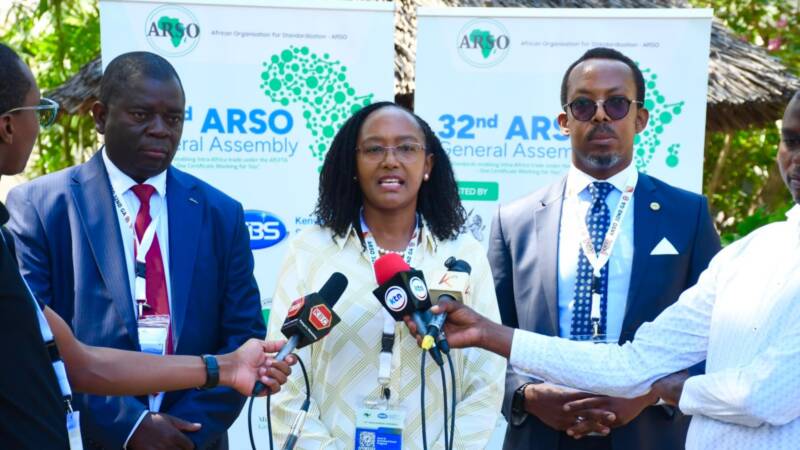
African countries are stepping up efforts to harmonise product standards and certification systems as the continent seeks to make cross-border trade faster, cheaper and more predictable under the African Continental Free Trade Area (AfCFTA).
The push is at the 32nd General Assembly of the African Organisation for Standardisation (ARSO), taking place in Mombasa from August 24 to 28.
At the centre of the discussions is a proposal to have products tested and certified once, with the certification recognised across African markets.
Kenya Bureau of Standards (KEBS) Managing Director Esther Ngari said the current practice of repeatedly testing products as they cross borders creates unnecessary costs for businesses and slows trade.
She said harmonised standards would allow a product certified in Kenya, for example, to access other African markets without undergoing another round of testing.
Ngari said this would be particularly important as Kenya and other countries seek to take advantage of the wider market created by AfCFTA.
“Once a certificate is issued in one country, the products can be able to cross over the borders without having to be retested again,” she said.
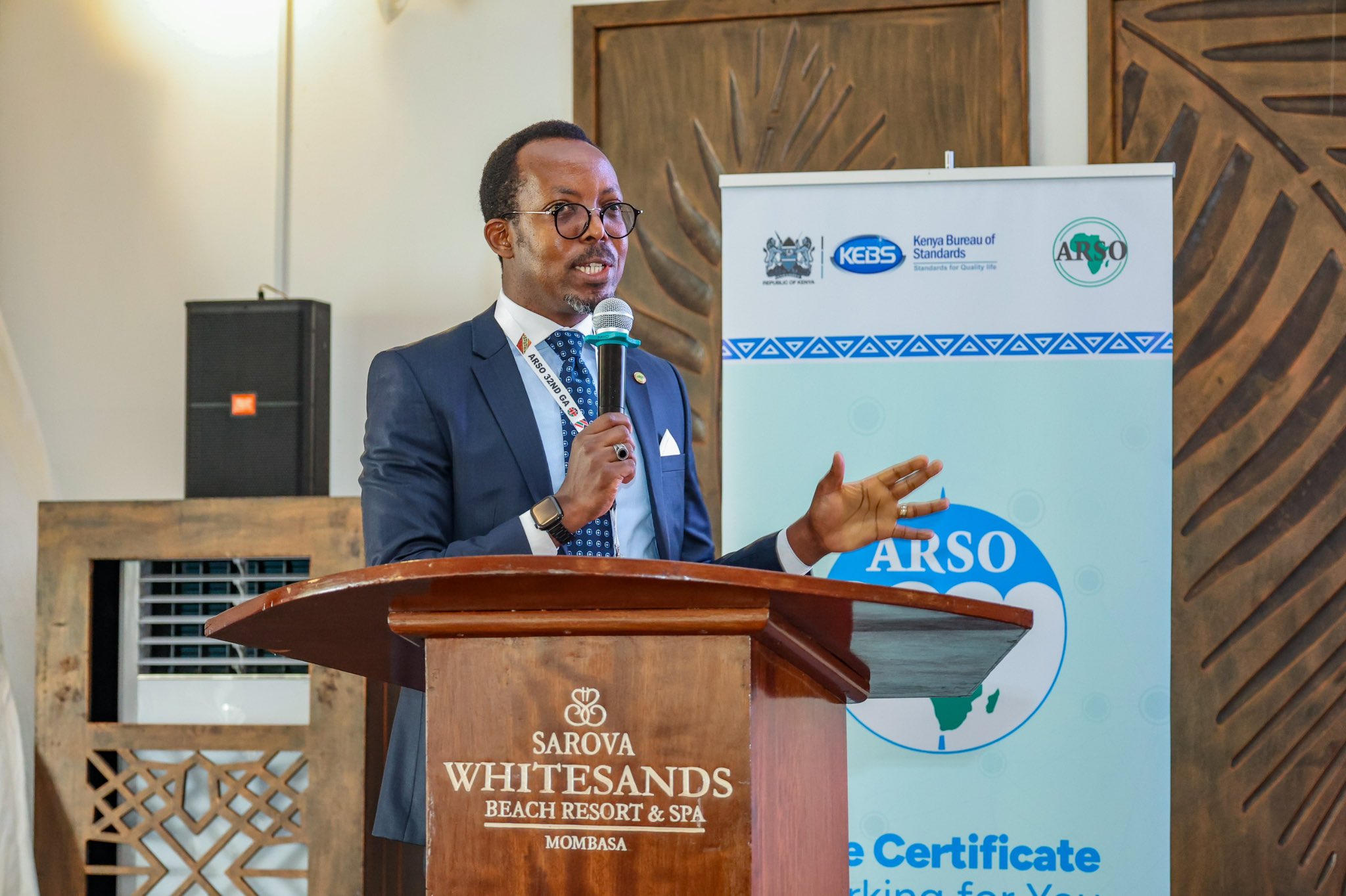
The ARSO Secretary General, Dr Harmogene Nsengimana, said the organisation has already harmonised more than 2,700 standards, although significant work remains to ensure the standards are adopted and implemented across the continent.
“We want to realise our motto of one standard, one test, one certificate accepted everywhere,” Nsengimana said.
He said harmonised standards must be backed by stronger testing and laboratory capacity, noting that certification can only be effective when countries have reliable conformity assessment systems.
Nsengimana said standards covering 28 per cent of tariff lines submitted under AfCFTA had so far been addressed, leaving 72 per cent still to be covered.
ARSO is also advancing the Africa Quality Mark, with nine countries already participating and 10 more in the pipeline, according to Nsengimana.
He said the initiative would help create greater confidence in products traded across African markets while supporting the continent's broader quality infrastructure.
The organisation is prioritising sectors including agro-processing, automotive, pharmaceuticals, transport and services, textiles and leather. ARSO says its standards harmonisation work is focused on priority value chains with potential to strengthen intra-African trade and industrial development.
However, Nsengimana said 10 African countries are yet to join ARSO, creating a gap in efforts to establish a continent-wide standards framework.
He called for the remaining countries to come on board and for stronger mutual recognition arrangements to eliminate double testing and certification costs.
Zambia Bureau of Standards Executive Director Nathan Sing'ambwa, who chairs the ARSO Champions, said member states also need to move beyond adopting standards to actually applying them.
He said manufacturers should view standards as an investment in the quality and competitiveness of their products rather than an additional cost.
“Standards are not adding cost but adding value to your product,” Sing'ambwa said.
He said compliance with standards would enable African manufacturers, particularly small and medium-sized enterprises, to compete more effectively in both regional and international markets.
The Mombasa assembly is expected to advance discussions on the ARSO Quality Mark, harmonised standards and conformity assessment as part of efforts to remove technical barriers and create a more integrated African market.