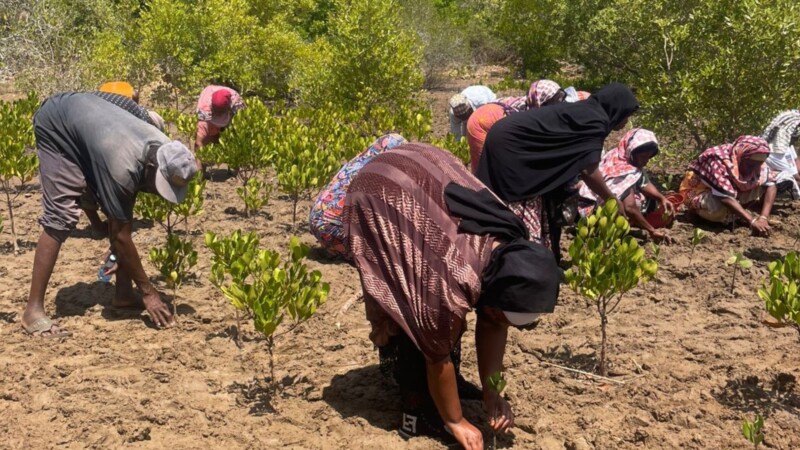
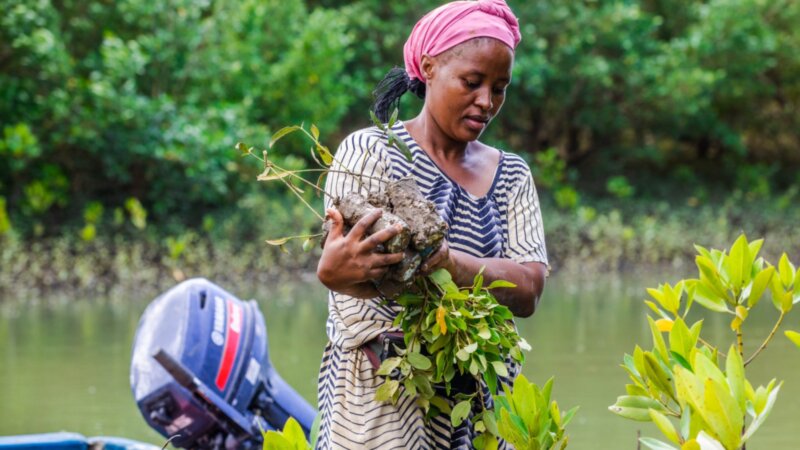
LAMU, Kenya—Environmental experts along Kenya’s coast are increasingly relying on weather forecast data to improve the success of mangrove restoration projects as efforts to restore degraded coastal ecosystems intensify.
Led by Lamu County environmentalist Rassam Mansur, conservationists say climate and rainfall forecasts are now central in determining when to prepare seedlings and carry out planting activities.
Speaking to reporters, Mansur said aligning restoration work with seasonal rainfall patterns helps improve survival rates and reduces risks such as flooding that can destroy young mangrove plants.
He urged stakeholders involved in mangrove rehabilitation to prioritise planting during the onset of the rainy season, when conditions are more favourable for growth.
“Mangrove restoration depends on freshwater input, especially during the rainy season, as it reduces salinity and supports growth,” he said.
He also called on fishing communities and other local stakeholders to incorporate weather information into restoration planning to improve long-term outcomes.
The approach comes amid concerns over the effectiveness of mangrove restoration efforts, with studies indicating that up to 80 percent of past planting initiatives have failed due to poor planning and limited use of climate data.
Experts note that mangrove recovery depends not only on planting seedlings but also on supporting natural regeneration processes, which are more successful when guided by environmental conditions.
Mangroves play a vital role in coastal protection, helping prevent erosion, supporting marine biodiversity, and sustaining fisheries that coastal communities depend on.
Conservationists are now pushing for more science-based restoration strategies as climate change and human pressure continue to threaten coastal ecosystems.