Greenpeace Africa has called on African governments to take decisive action against illegal fishing and accelerate the implementation of a landmark international treaty aimed at protecting marine biodiversity as leaders gather for the United Nations Ocean Conference in Mombasa.
The environmental organisation said African waters are under increasing pressure from illegal, unreported and unregulated (IUU) fishing, plastic pollution and climate change, threatening the livelihoods of millions of people who depend on marine resources.
Speaking ahead of the conference, Greenpeace Africa Oceans Campaign Lead Dr. Aliou Ba said African countries have a historic opportunity to strengthen protections for the high seas through the Biodiversity Beyond National Jurisdiction (BBNJ) Agreement.
“The BBNJ Agreement gives African governments a historic opportunity to protect the high seas and safeguard the future of our fisheries. At the same time, we must confront the ongoing crisis of IUU fishing, which is stripping African waters of life and robbing communities of food and income. Governments cannot afford to delay. The time to act is now,” said Ba.
According to Greenpeace Africa, an estimated 600 million Africans rely on ocean resources for food security and livelihoods, making the health of marine ecosystems critical to communities across the continent.
The organisation is urging governments to support the establishment of a High Seas Marine Protected Area in the Canary-Guinea Convergence Zone and to speed up the ratification and implementation of the BBNJ Agreement, adopted in 2023.
Greenpeace Africa is also advocating for stronger measures against harmful industrial fishing practices and greater participation of coastal communities in decisions affecting ocean governance.
In addition, the organisation warned that plastic pollution continues to pose a serious threat to marine ecosystems.
Greenpeace Africa Plastics Campaign Lead Hellen Dena said efforts to conserve the oceans must go hand in hand with action to tackle pollution.
“You cannot talk about protecting the ocean without addressing plastic pollution. From beaches to deep-sea ecosystems, plastic waste is everywhere. African governments must push for strong global and regional action that tackles pollution at its source while protecting marine biodiversity through frameworks like the BBNJ Agreement,” she said.
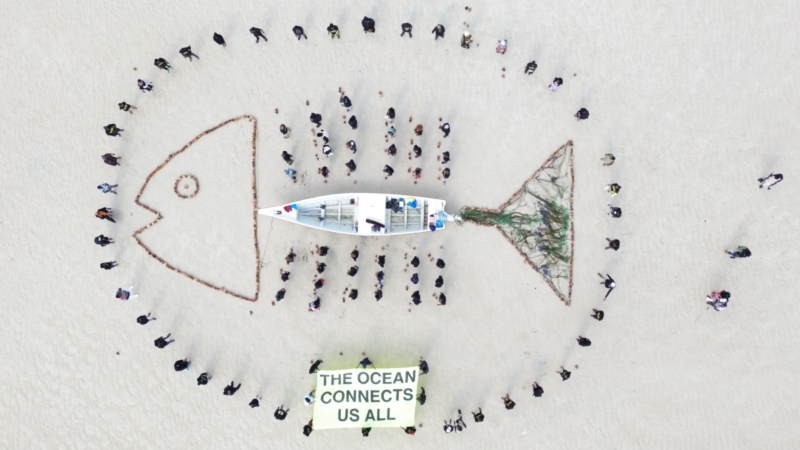
To mark the opening of the conference, Greenpeace Africa staff, volunteers and members of local communities created a large sand artwork at Pirates Beach in Mombasa bearing the message “The Ocean Connects Us All”, which the organisation said symbolises growing calls for ocean justice across the continent.
Greenpeace Africa said it hopes commitments made during the conference will translate into concrete measures to protect Africa's oceans and the communities whose livelihoods depend on them.